
Vacuum Cleaner Battery Not Charging? Common Causes and Fixes
Last updated:
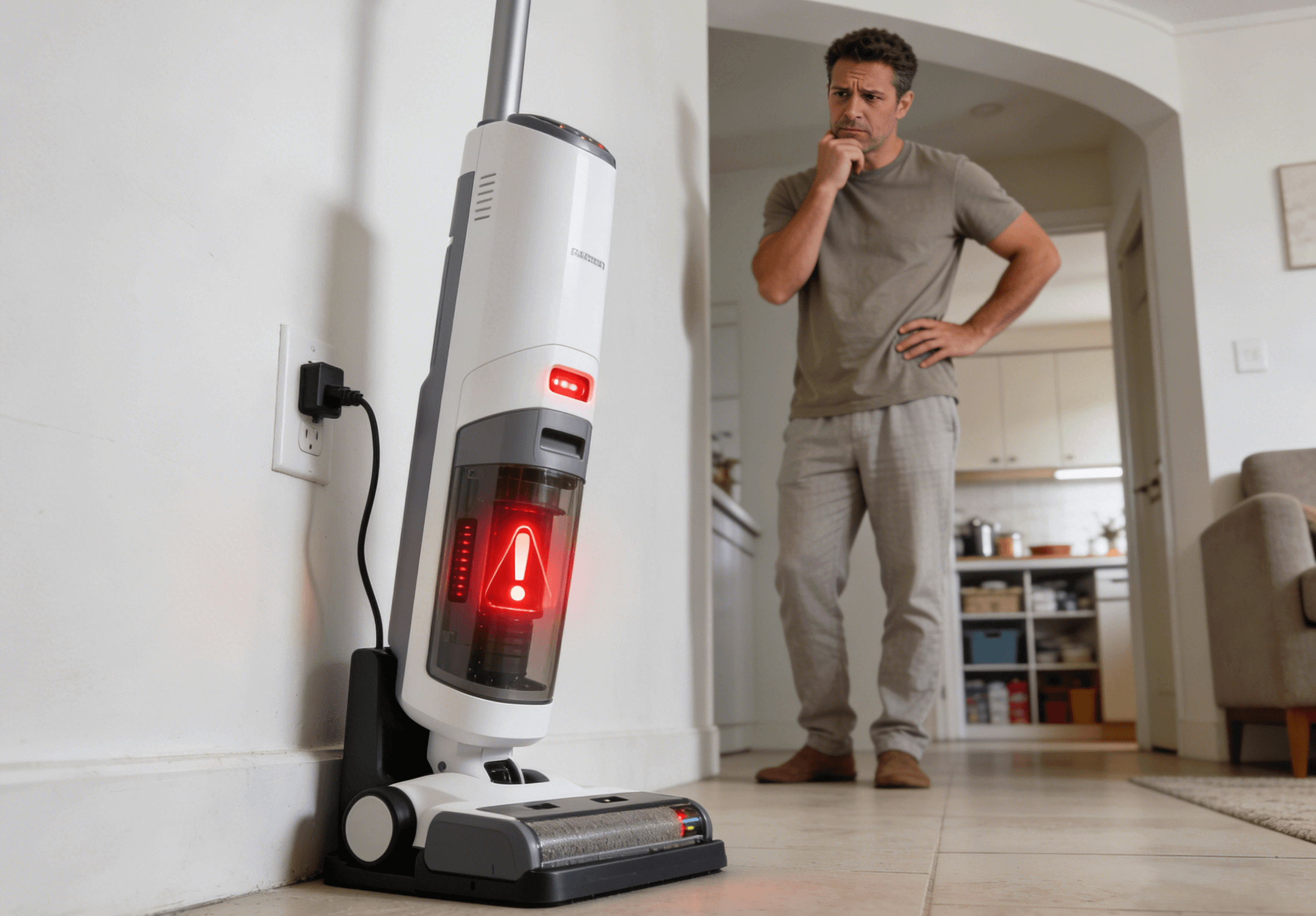
When your vacuum cleaner battery suddenly stops charging, it can be frustrating—especially when everything else seems to be working normally. Before assuming the battery has failed completely, it’s important to understand what actually causes charging problems and how to identify the real issue.
This guide explains the most common reasons a vacuum cleaner battery won’t charge, along with practical ways to diagnose and fix the problem without assuming that any single solution applies to every situation.
Battery Aging and Natural Degradation
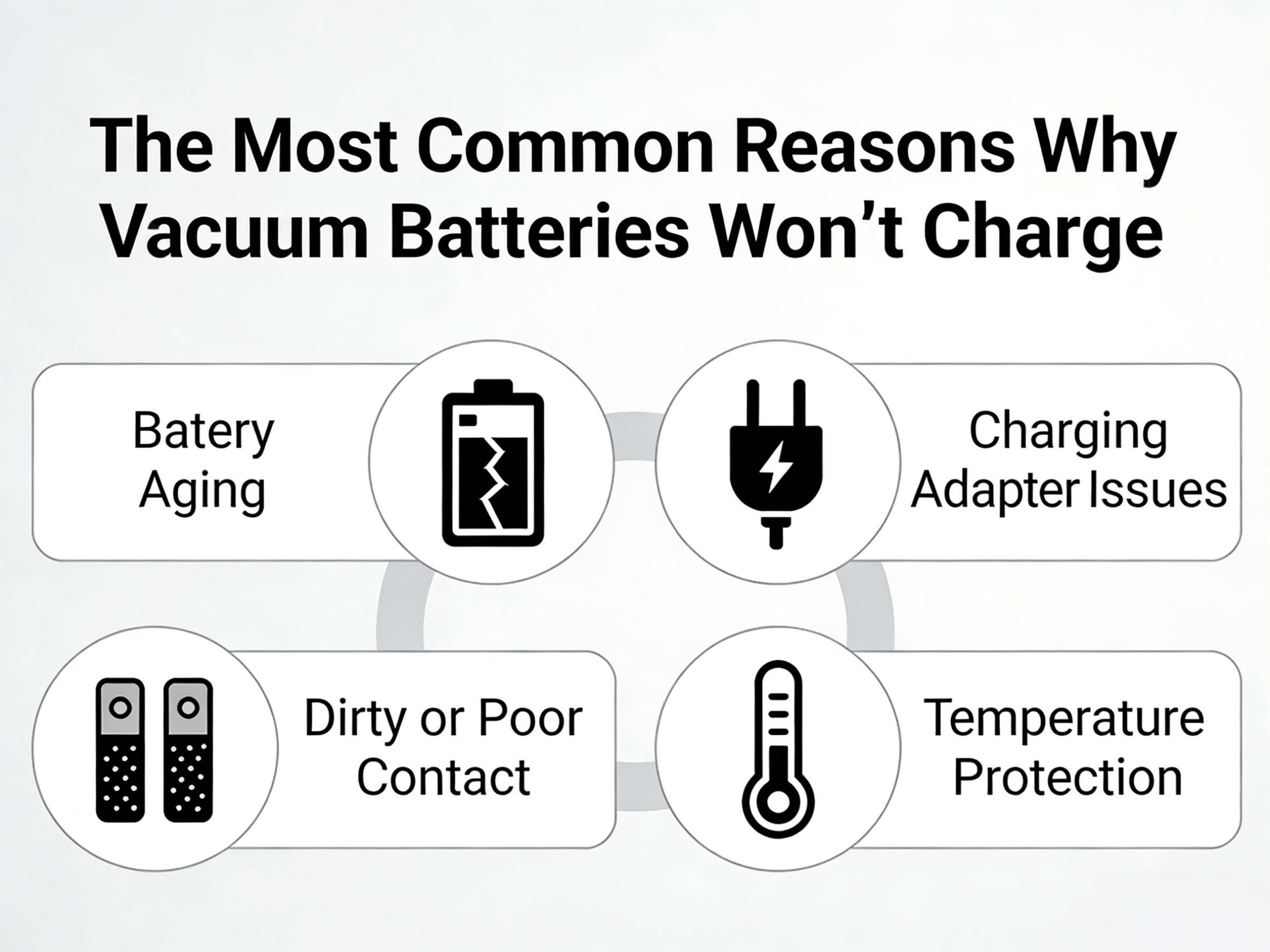
All lithium-ion batteries have a limited lifespan. Over time, repeated charge and discharge cycles reduce the battery’s ability to store energy.
As a battery ages, you may notice that it no longer charges fully, charging stops earlier than expected, or runtime becomes extremely short. In many cases, a battery that has reached the end of its usable cycle life can no longer accept a charge effectively.
This type of degradation is normal and affects all lithium batteries, regardless of whether they are original or replacement batteries.
Charger and Power Supply Issues
Not all charging problems are caused by the battery itself. Vacuum cleaner batteries rely on chargers that meet specific electrical requirements, including correct voltage, current output, and connector design.
If a charger does not match these specifications, charging may fail or behave inconsistently. This can happen with any charger if compatibility requirements are not met.
It is also worth checking for basic issues such as loose cables, debris inside the charging port, or unstable wall outlets, as these can interrupt the charging process.
Dirty or Damaged Charging Contacts
Proper charging depends on clean and stable contact between the battery and the vacuum cleaner or charging dock. Dust buildup, oxidation, or minor deformation of the metal contacts can interfere with power transfer.
Even small contact issues can prevent charging entirely. Carefully cleaning the contacts with a dry cloth or compressed air may restore normal charging behavior in some cases.
Internal Protection Systems in Vacuum Cleaners
Many modern vacuum cleaners include built-in protection mechanisms designed to prevent overheating, overvoltage, or short circuits. When these systems detect abnormal conditions, charging may be temporarily or permanently disabled.
In such situations, replacing the battery alone may not resolve the issue, as the underlying cause could be related to the vacuum’s internal electronics or charging dock rather than the battery itself.
Can Replacing the Battery Fix Charging Problems?
Replacing the battery can be an effective solution when the original battery has degraded and can no longer hold or accept a charge properly.
A correctly matched battery—one that aligns with the required voltage range, connector type, and protection standards—can restore normal operation if the battery is the primary cause of the charging issue.
However, if charging problems persist after replacement, the issue may lie with the charger, charging interface, or the vacuum cleaner itself.
Common Misunderstandings About Battery Replacement
“Replacing the battery is only a temporary fix”
Many replacement batteries are designed for long-term use. When properly matched and used under normal conditions, they can provide reliable performance for years.
“Original batteries are always more durable”
Battery durability depends on factors such as design quality, cell selection, and usage habits. Whether a battery is original or a replacement is not the sole factor that determines its lifespan.
When Battery Replacement Is a Reasonable Choice
Battery replacement is often a practical option when the battery no longer holds a usable charge, charging fails despite a working charger, or runtime has become significantly shorter than expected.
In these cases, selecting a battery that meets the correct specifications can help restore normal vacuum cleaner performance.
Final Thoughts
When a vacuum cleaner battery won’t charge, the cause is rarely a single issue. Battery aging, charger compatibility, contact quality, and internal protection systems all play a role.
Focusing on compatibility and proper diagnosis—rather than whether a battery is original or replacement—leads to better decisions and more reliable results.